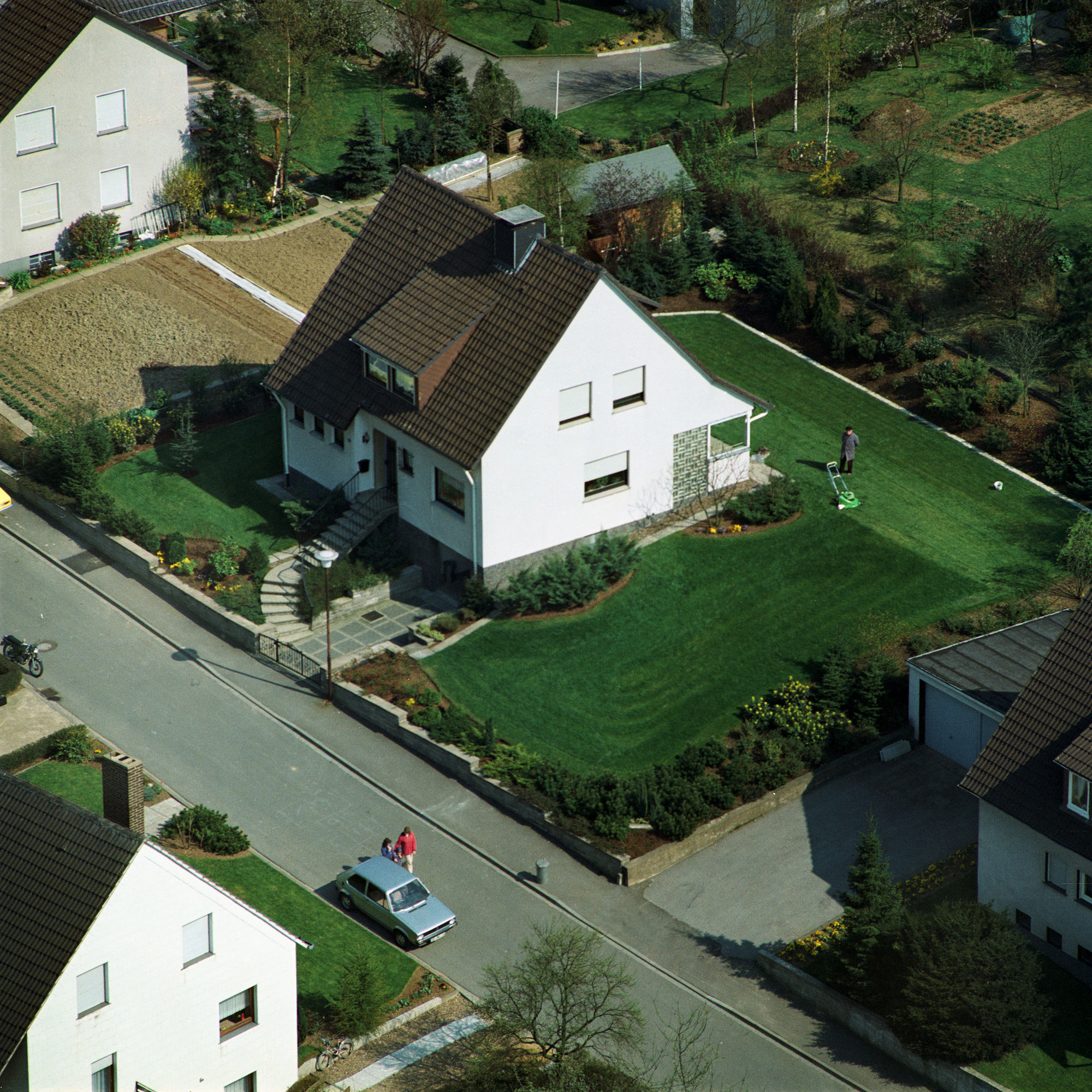
Lush lawns, blue swimming pools, double garages: Suburbia delves into the (visual) worlds of American suburbia – politics, architecture, pop culture and advertising have shaped desires. The exhibition traces the rise of suburbia through photos, films, literature, historical material and art projects. However, against the backdrop of housing shortages, the climate crisis, and an aging society, the former promise of freedom and prosperity is now being called into question in many places. Single-family homes use a lot of energy and space, reinforce social stereotypes and class differences, and are often inhabited by only one or two people.
But what does the future hold? The stock offers enormous potential. By extending rather than demolishing and through clever transformation, the existing stock of single-family homes offers ways out of the housing crisis. The exhibition illustrates the historical development of these buildings during the economic boom of post-war Germany with home stories from the magazine Schöner Wohnen. A library holding all the issues from the 1960s and 1970s invites visitors to flip through dream homes, consumer worlds, and family ideologies. The exhibition also shows how it is possible to create new housing in the Rhine-Main area within the existing stock of single-family homes – by using a simple method that combines energy-efficient renovation with an expansion of housing space.
Suburbia is an exhibition organized by the Centre de Cultura Contemporània de Barcelona and Deutsches Architekturmuseum in cooperation with the TU Münchenand with contribution from the research field dwelling+/-exhibiting, Mariann Steegmann Institute, Art & Gender, Bremen.
The Wüstenrot Stiftung, which has long been committed to future strategies for single-family homes, made the exhibition at the DAM possible and is presenting its own research in collaboration with the HFT Stuttgart.
Opening: Friday, March 20, 2026, 7 p.m.
For more information, click here.
